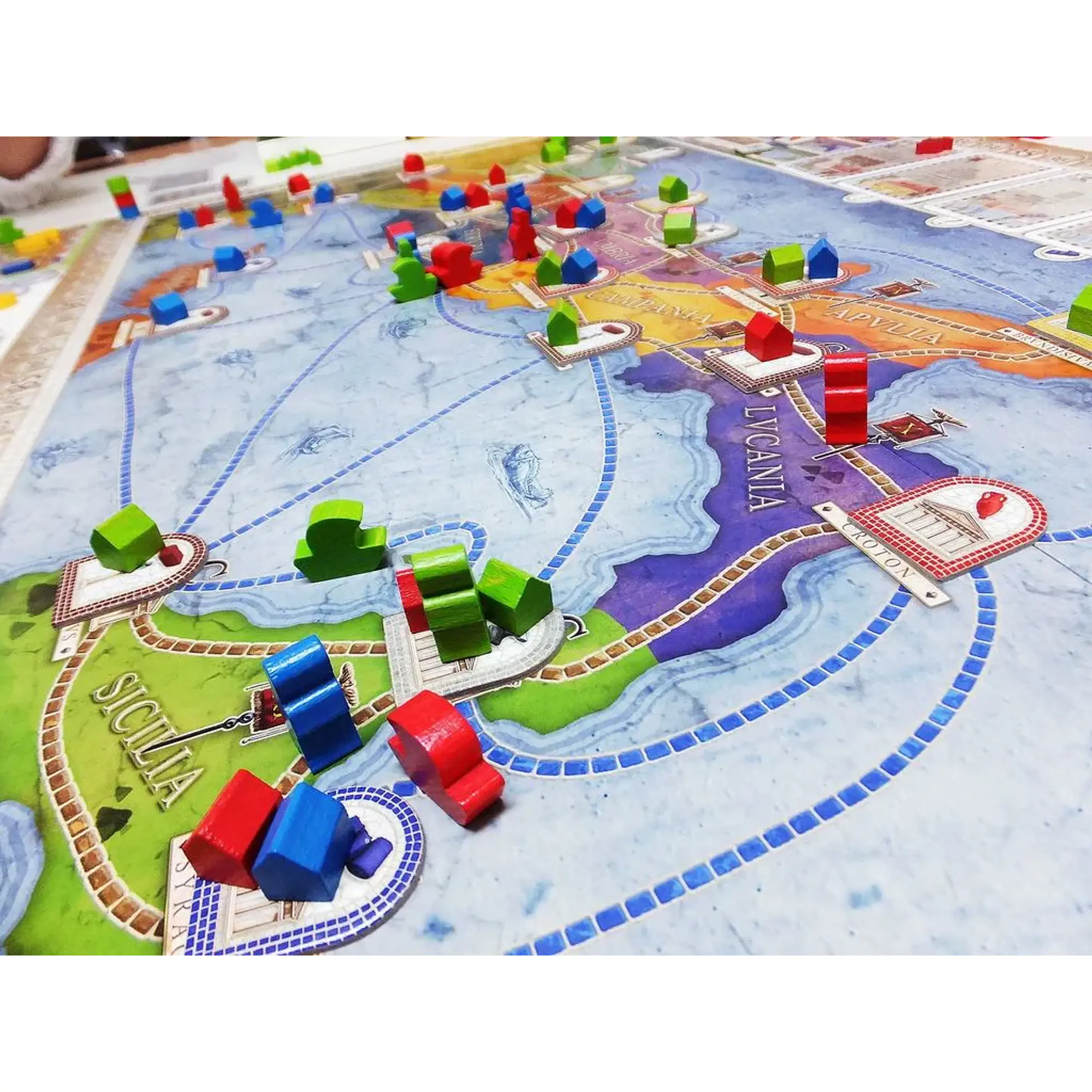
“Concordia” is a strategic board game designed by Mac Gerdts, first published in 2013. It is set in the period of the Roman Empire, where players take on the roles of Roman patricians expanding their influence across various provinces of the empire. The goal of the game is to build a successful trade network and gain the favor of different Roman gods, which is reflected in victory points.
“Concordia” is known for its elegant, luck-free mechanics, where everything depends on the player’s decisions. The core mechanism of the game is based on card play. Each player begins with the same set of cards representing different actions, such as:
- Tribune: Allows the player to take all previously played cards back into their hand.
- Prefect: Enables the player to produce goods in certain provinces or gain money.
- Architect: Allows the movement of colonists on the map and the construction of trading houses in cities.
- Merchant: Enables the player to buy and sell goods.
During the game, players can acquire new cards that not only provide additional actions but also determine how they score victory points at the end of the game based on the favor of different gods (e.g., Vesta for money, Jupiter for cities without other trading houses, Saturn for different provinces, etc.).
“Concordia” offers a deep strategic experience with minimal randomness, meaning that success and victory depend primarily on players’ decisions and long-term planning. The game is highly regarded for its simple yet deep mechanics, which allow for various strategies and paths to victory. In addition, player interaction is present but not aggressive, enabling competitive yet peaceful gameplay. The aesthetically pleasing design and historical theme further enhance the overall experience, making “Concordia” a popular choice among fans of strategic board games.

.jpg)
.jpg)
.jpg)